
The YogaSOL approach
A live experience shaped around the room you are in.
YogaSOL brings movement, breathwork, meditation, mindful awareness, and time to pause into a shared setting—without asking every group to follow the same script. The practices are shaped to become familiar enough to support people beyond the gathering itself.
YogaSOL Rising
The Heart, Science & Art of Being Well.
Supporting a more aware and connected culture of care.
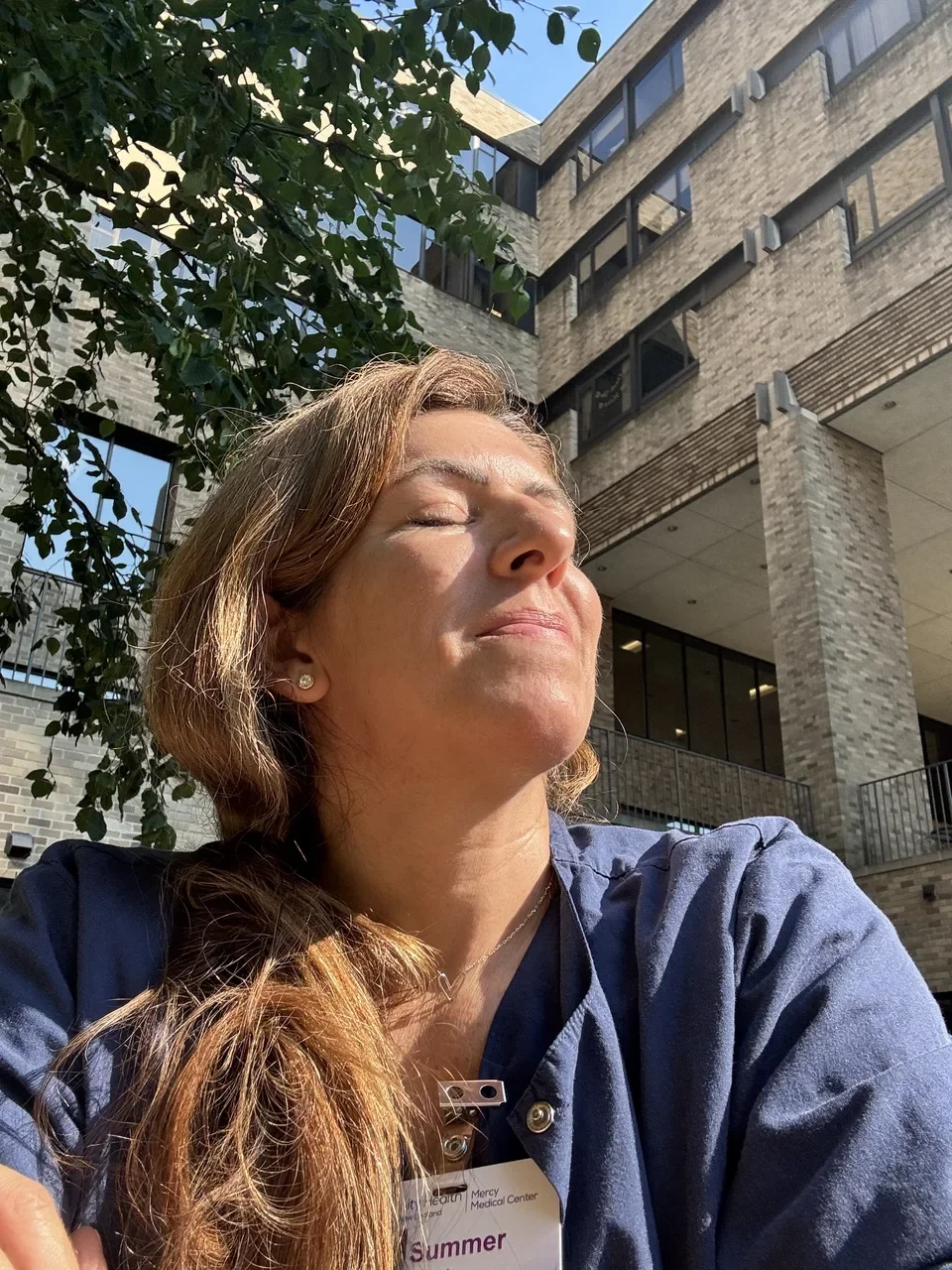
Ancient wisdom and modern science come together to invite caregivers to cultivate awareness, connection, and wellbeing—within themselves, with one another, and in the environments where they care for others.
Stress can affect breathing, physical tension, attention, and the pull toward automatic reaction. Through interoception—the ability to notice what is happening within the body—participants can begin to recognize those changes earlier and with more curiosity.
Repeated practice with breath, accessible movement, mindfulness, reflection, and connection builds familiarity. In a high-pressure moment, a brief cue—an intentional breath, noticing unnecessary tension, or returning attention to the body, task, or team—may help support a more intentional response.
Steady Mind. Present Body.Present Body. Responsive Mind.
How the science connects
The nervous system is not separate from the moment.
The brain and body are continually exchanging information. Under pressure, that conversation can influence what we notice, how we breathe, where we hold tension, and how quickly we react.
YogaSOL works with that connection through accessible movement, intentional breathing, mindful awareness, and reflection. The goal is not to switch stress off. It is to become more familiar with the body’s signals and practice ways of meeting them with greater awareness.
- 01
The body reads pressure
Under stress, breathing, muscle tension, heart rate, and attention can change as the nervous system prepares the body to respond. This activation is not a failure—it is part of being human.
- 02
Awareness creates a point of choice
Interoception is the ability to sense what is happening inside the body. Becoming more familiar with those signals can help someone notice activation earlier, before an automatic reaction becomes the only available response.
- 03
Breath connects intention and physiology
Breathing happens automatically, yet it can also be guided intentionally. A slower, deliberate breath can influence cardiorespiratory and autonomic activity while offering a simple cue to return attention to the body and the present task.
- 04
Repetition builds familiarity
Movement, breath, mindfulness, and reflection are practiced before the demanding moment. Repetition does not remove stress, but it can make familiar cues easier to recognize and access when the pace changes.
Research foundation
Informed by peer-reviewed research on acute stress and executive function, interoception and mindfulness, and the physiology of slow breathing. These practices support exploration and do not replace clinical care, professional judgment, or workplace protocols.
The elements of a YogaSOL experience
Move. Breathe. Notice. Connect.
The elements may be simple. Their place in the gathering is considered—and repeated practice can make brief, familiar cues more available when the pace changes.
- 01

Movement & embodied yoga
Accessible movement can offer people a way to reconnect with the body they are already living in.
- 02

Breath & mindful awareness
Conscious breathing and quiet attention can create a pause inside a full day.
- 03

Stillness, reflection & connection
Meditation, reflection, or a shared moment of stillness can make room for an intentional gathering.
The Planning Framework
Shaped with your people, not delivered to them.
What if meaningful change begins not only with the room we are in, but with what we bring into it?
The goal is not to force a pre-set format. It is to create an experience that feels appropriate and meaningful to the people who are there, while giving them space to notice, understand, and practice what supports a more engaged response.
- 01
Notice & understand
We start with the people attending, the setting you have secured, and the ways stress and attention may show up in that environment.
- 02
Practice & access
The sequence of movement, breathwork, and reflection is tailored so participants can explore familiar cues that fit the constraints of the gathering.
- 03
Respond together
A live, thoughtfully facilitated experience that supports presence and connection without promising an absence of urgency or requiring a rigid script.
Invitation
What are you hoping to make space for?
Tell Summer about the people you are gathering and the intentions you are bringing to the room.